Independent Reporting and Community Networking in Armenia
The New Silk Road West: Armenia’s Historic Pivot to Europe
By: Mikael Yamiosei, IRCNA
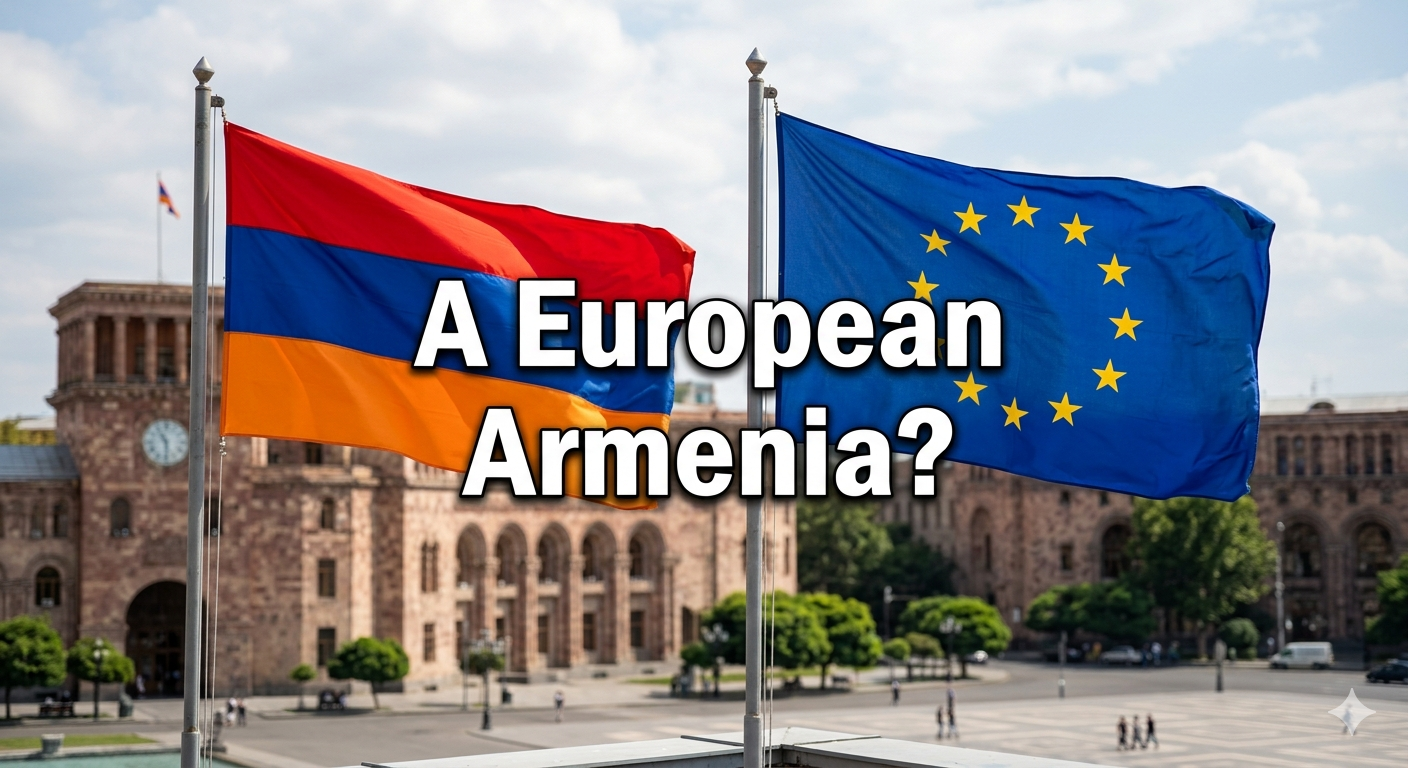
For three decades, the Republic of Armenia has navigated a precarious path between East and West, bound by history to Moscow the USSR, and by aspiration to Brussels. What was once a careful diplomatic dance has, in the past two years, accelerated into a determined sprint. From the ashes of a catastrophic war and the erosion of old security guarantees, a new vision for Armenia is emerging: one anchored in European values, connectivity, and a future within the European Union itself.
This article is not merely a chronicle of summits and agreements, but a document of a nation in profound geopolitical metamorphosis. As the founder of IRCNA, I have witnessed this transformation from the streets of Yerevan to the halls of Brussels, and this article seeks to chart the journey—from the first tentative handshakes of the 1990s to the unprecedented events of May 2026, when the machinery of Europe was physically and politically moved to the South Caucasus.
THE FOUNDATIONS OF PARTNERSHIP (1992–2026)
How a relationship born in the collapse of the Soviet Union grew into a strategic alliance.
Diplomatic relations between the Republic of Armenia and the European Union were established on 10 August 1992, less than a year after Armenia’s independence referendum. The first concrete milestone was the Partnership and Cooperation Agreement (PCA), which entered into force on 1 July 1999, creating the initial legal framework for political dialogue and trade. This early period was marked by cautious optimism as the EU expanded eastward and Armenia sought to anchor itself in European institutions.
The relationship took a dramatic turn in 2013, a moment that would define Armenia’s geopolitical identity for the next decade. After years of negotiations, Armenia was poised to sign an Association Agreement (AA) with the EU, including a Deep and Comprehensive Free Trade Area (DCFTA). However, under intense pressure from Russia, President Serzh Sargsyan abruptly reversed course, and Armenia instead joined the Russian-led Eurasian Economic Union (EAEU), abandoning the EU deal. The joint statement issued in November 2013 simply noted they would “not proceed with its initialing due to Armenia’s new international commitments”.
For several years, relations remained frozen. But the political earthquake of the 2018 Velvet Revolution, which brought Nikol Pashinyan to power on a wave of democratic reform, changed the calculus. It cleared the path for a new, more flexible agreement. On November 24, 2017, Armenia and the EU signed the *Comprehensive and Enhanced Partnership Agreement* (CEPA) at the Eastern Partnership summit in Brussels. CEPA was a landmark, not a compromise: it aimed to “strengthen comprehensive political and economic partnership and cooperation – based on common values” . It provisionally applied from June 2018 and formally entered into force on March 1, 2021. CEPA became the bedrock upon which the next phase of integration would be built.
THE YEREVAN SPRING SUMMIT: A CAPITAL IN THE HEART OF EUROPE
How the 8th European Political Community summit transformed the continent’s political map.
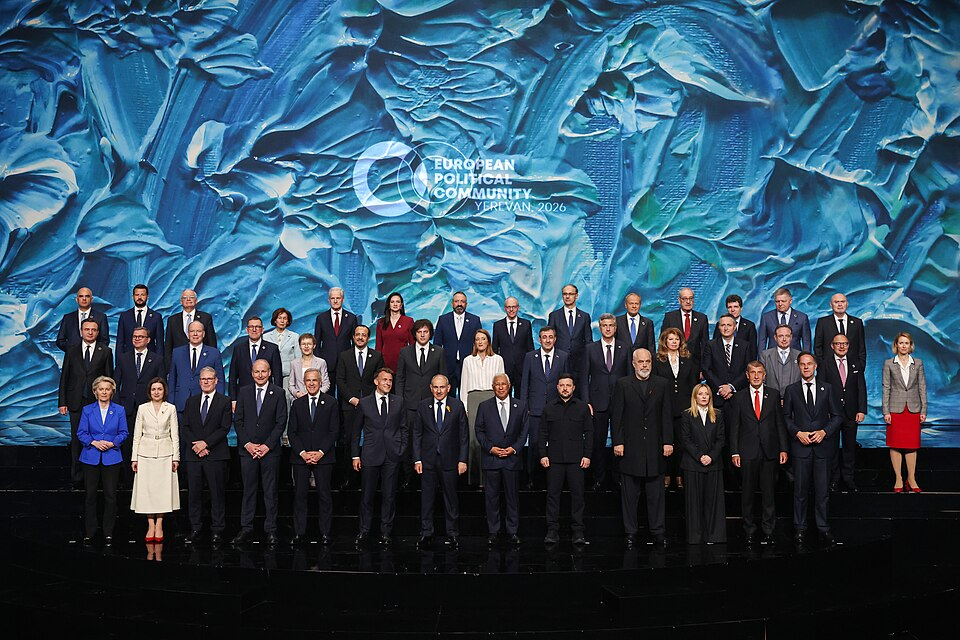
Picture by Lauren Hurley / No 10 Downing Street.
Nothing signaled Armenia’s geopolitical pivot more clearly than hosting the *8th European Political Community (*EPC*) Summit* on May 4–5, 2026. For the first time, this forum—designed to foster political and strategic dialogue across the continent—met in the South Caucasus . Nearly 50 delegations and over 40 heads of state and government gathered in Yerevan under the motto “Building the Future: Unity and Stability in Europe” .
The symbolism was undeniable. The summit was co-chaired by Armenian Prime Minister Nikol Pashinyan and European Council President António Costa. In his opening remarks, President Costa declared that the gathering “places Armenia in the heart of Europe, which is exactly where it belongs – in light of its long and rich history,” and praised it as “a summit of peace in the Caucasus”. For the first time, Azerbaijani President Ilham Aliyev participated via video link, and Canadian Prime Minister Mark Carney joined as the first non-European guest, underscoring the summit’s global significance.
On the sidelines of the EPC, the inaugural *EU-Armenia Summit* followed on May 5, where leaders signed a joint declaration reaffirming the EU’s support for “Armenia’s sovereignty, resilience, and comprehensive reform agenda”. The summit also saw the signing of the **EU-Armenia Connectivity Partnership**, the launch of a €2.5 billion investment plan, the formal submission of the visa liberalisation progress report, and the establishment of an **EU Partnership Mission in Armenia** to counter hybrid threats and bolster security. The event was a masterclass in diplomatic choreography, effectively replacing the EAEU’s economic gravity with the EU’s political and security architecture.
EUROPE DAY IN FREEDOM SQUARE: A CULTURAL BRIDGE
How music, dance, and information stalls built a people-to-people alliance.
Just days after the summits, on May 10, 2026, the European Union Delegation to Armenia transformed Freedom Square in the heart of Yerevan into a vibrant celebration of partnership. Under the theme *EU–Armenia: Closer Than Ever*, thousands of residents and visitors filled the square for an event that was part political statement, part cultural feast.
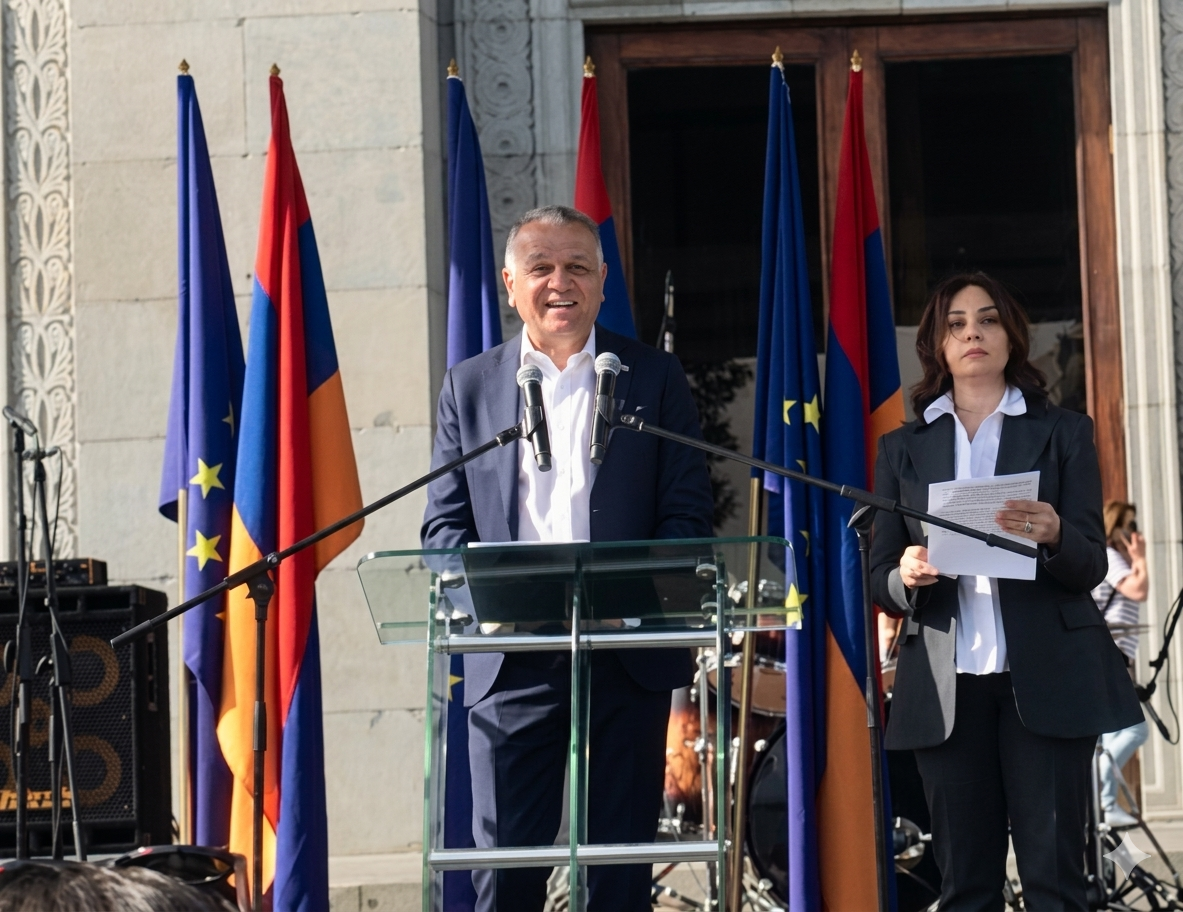
Photo By: IRCNA [digitally enhanced]
Europe Day commemorates the historic Schuman Declaration of May 9, 1950, which proposed the creation of a European Coal and Steel Community—the precursor to the modern EU. In his May 10th speech, EU Ambassador Vassilis Maragos said, “EU-Armenia partnership is built on shared values… These are the foundation of a fair and prosperous society”. The celebrations featured an info-fair with pavilions from EU member states and Armenia, showcasing EU-supported programs across the country.
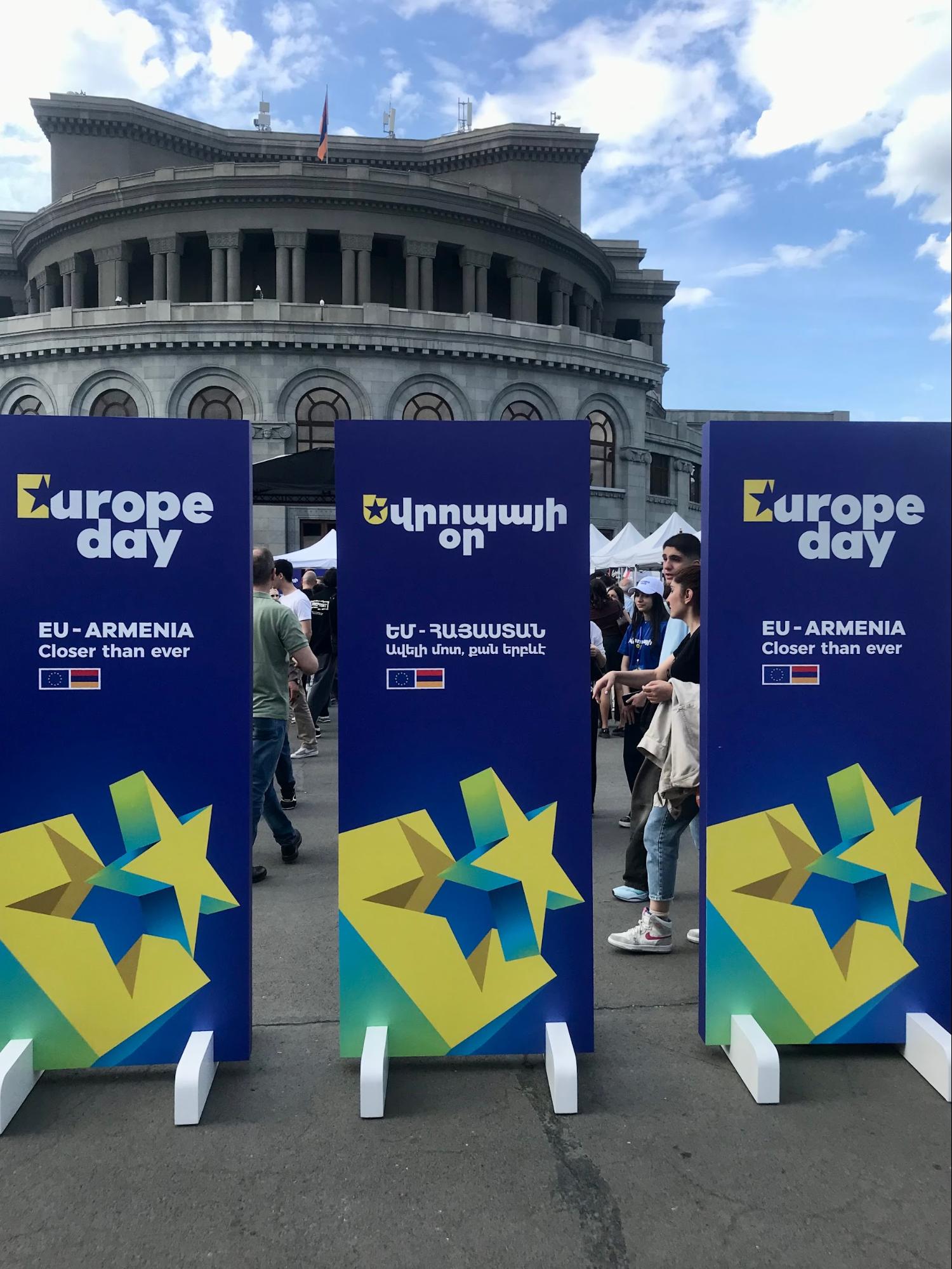
Photo By: IRCNA
Musical and dance performances by ensembles from both sides underscored the “cultural bridge” theme, highlighting how cultural diplomacy complements political and economic integration. For many Armenians, the event was a tangible, joyful experience of European belonging—a stark contrast to the gray narratives of the past and a vivid demonstration of soft power in action.
THE ECONOMIC CORRIDOR: BUILDING A STRATEGIC HUB
Mapping the financial and infrastructure investments reshaping the nation.
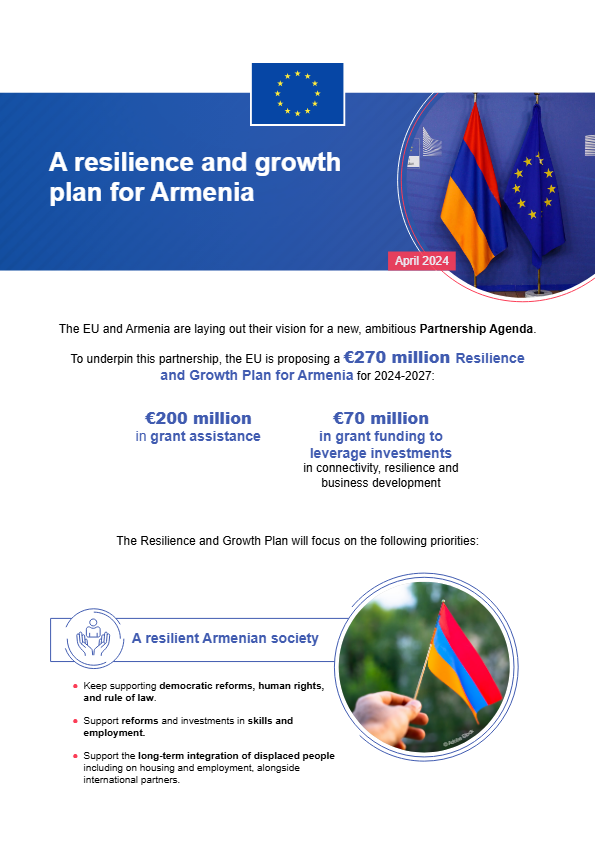
At the core of the rapprochement is a massive influx of European investment, designed to transform Armenia into a *strategic transport and energy hub* The centerpiece is the **€270 million EU Resilience and Growth Plan for Armenia** (2024–2027) , built on three pillars: connectivity and business; bringing Armenia closer to the EU; and fostering a resilient, inclusive society.
The headline figure, however, is staggering: under the *Global Gateway strategy* the EU estimates its total investments in Armenia in the near future at **€2.5 billion**, These investments target four key areas:
- ** Connectivity:** The newly signed EU-Armenia Connectivity Partnership will integrate Armenia into the *Trans-Caspian “Middle Corridor*” , a trade route bypassing Russia, linking Europe with Central Asia. This positions Armenia as a crucial land bridge.
- **Energy Security**: The EU will invest €25 million into constructing energy storage facilities and help diversify energy supplies, including support for developing solar power and a roadmap for decommissioning the aging Armenian Nuclear Power Plant.
- **Digital and High-Tech**: A call for expressions of interest has been launched to mobilize strategic investments in digital infrastructure, semiconductor skills, AI, and innovation ecosystems.
- **Private Sector and SMEs**: The EIB Group and Ameriabank have signed a deal unlocking up to **€106.25 million** in new SME financing, expected to support 900 small businesses and sustain over 5,000 jobs. This builds on a **€140 million funding agreement for 2025–2027** specifically tied to visa liberalisation reforms.
This is not aid; it is a multi-billion-euro bet on Armenia’s economic future.
THE PATH AHEAD: MEMBERSHIP AND STRATEGIC ALIGNMENT
Assessing the road to EU membership and the challenges that remain.
The climax of this process is the formal launch of Armenia’s EU accession process. On March 26, 2025, and signed into law on April 4, 2025, the Armenian parliament adopted the law “On Launching the Accession Process of the Republic of Armenia to the European Union”. The May 2026 joint declaration formally “acknowledges the European aspirations of the Armenian people… expressing the country’s intention to move towards the EU”.
Despite this political breakthrough, significant structural challenges remain. Prime Minister Pashinyan has stated that Armenia has no immediate plan for a referendum on leaving the EAEU, acknowledging the complex economic ties with Russia. However, the direction of travel is unmistakable, especially given Armenia’s suspension of its membership in the Moscow-led CSTO security alliance.
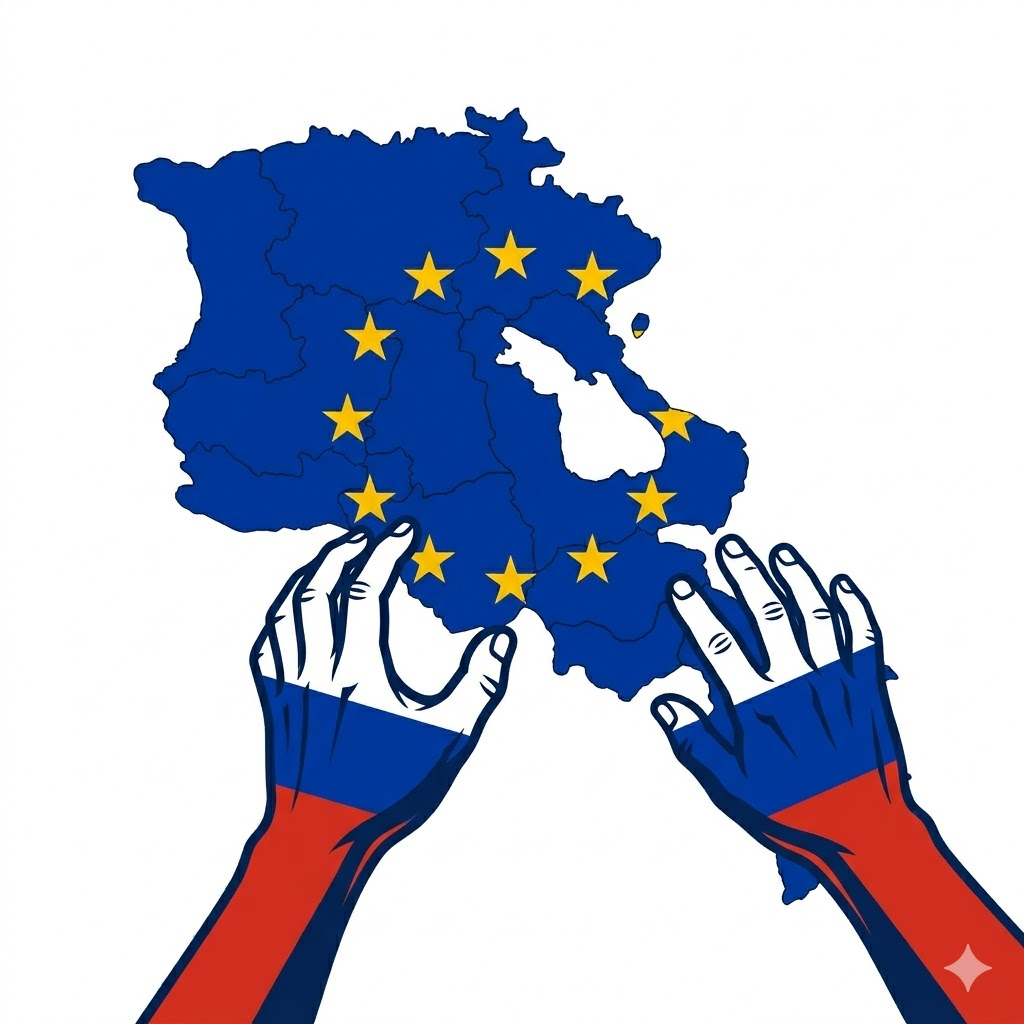
The EU has already shown its commitment: the *first €30 million in European Peace Facility assistance* has been delivered to the Armenian Armed Forces. The new **EU Partnership Mission** will help counter foreign information manipulation and hybrid threats. While full membership remains a long-term prospect requiring years of reforms (likely a decade or more), Armenia has crossed the Rubicon. It has chosen a future within the European political and economic space. The nation of Mount Ararat is now, officially and irrevocably, charting a course for Brussels.
—
This article was written for the Independent Reporting and Community Networking in Armenia [IRCNA] By Mikael Yamiosei on 11/05/ 2026 and published publicly at 10:30pm EVN Time. For any and all inquiries, please feel free to Email me: Mikael.Yamiosei@gmail.com
Glossary and Figures:
**CEPA:** *Comprehensive and Enhanced Partnership Agreement*, the 2017 treaty governing EU-Armenia relations
**CSTO**: *Collective Security Treaty Organization*, a Russia-led military alliance
**DCFTA**: D*eep and Comprehensive Free Trade Area*, the economic component of the 2013 Association Agreement
**EAEU**: *Eurasian Economic Union*, the Russia-led economic bloc
**EIB**: *European Investment Bank*, the lending arm of the EU
**EPC**: *European Political Community*, a European intergovernmental forum established in 2022
**IRCNA**: *Independent Reporting and Community Networking in Armenia*, Independent led non-profit press & community organization
**PCA**: Partnership and Cooperation Agreement, the 1999 founding treaty
**Figures Featured in the Article:**
**Nikol Pashinyan** — Prime Minister of Armenia (2018–present). The central protagonist of this pivot. His democratic “Velvet Revolution” in 2018 broke the old political mold and his government has since driven the formal EU accession process and the strategic shift away from Moscow.
**Ursula von der Leyen** — President of the European Commission (2019–present). She has been a key driver of the EU’s Global Gateway investment plan and personally attended the Yerevan summit to announce major funding packages.
**António Costa** — President of the European Council (2024–present). He co-chaired the historic Yerevan EPC summit and has been the primary institutional voice welcoming Armenia “into the heart of Europe”.
**Vassilis Maragos** — EU Ambassador to Armenia. He has been the public face of the partnership on the ground, from announcing Europe Day celebrations to signing major economic deals.
**Vahagn Khachaturyan** — President of Armenia (2022–present). He signed the 2025 bill formally launching the EU accession process into law.
**Emmanuel Macron** — President of France. Attended the Yerevan summit and issued the starkest assessment, stating that Armenia has chosen to “break free” from being “in a way, a satellite of Russia”.
Comments