 Independent Reporting and Community Networking in Armenia
LOCAL REACTION TO ARMENIA'S REPUBLIC DAY
A street-level survey finds strong support for the military display, but for many the celebration could not be separated from questions of prisoners, displacement, and the political climate.
Editorial Disclaimer: IRCNA is an independent, nonpartisan, nonprofit platform dedicated to community-driven journalism in Armenia. The views, opinions, and statements expressed by individuals quoted in this or any other IRCNA article are solely those of the individuals expressing them and do not reflect the views, opinions, or editorial position of IRCNA as an organization. IRCNA does not endorse, support, or oppose any political party, candidate, government, or ideology. Our mission is to provide a platform for Armenian voices — across all perspectives — while maintaining strict editorial independence and a commitment to factual accuracy. We report what people say. We do not tell you what to think.
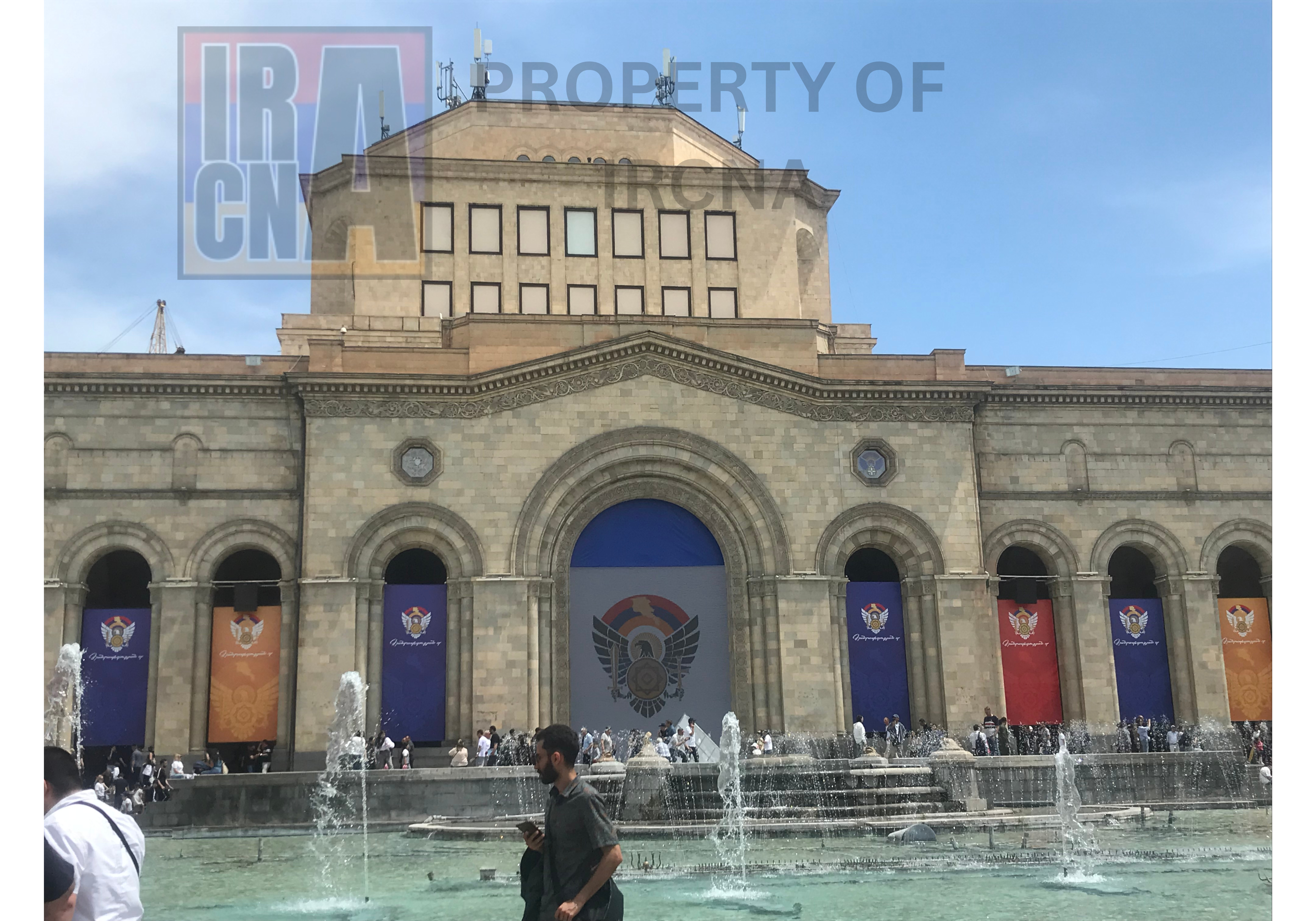
YEREVAN — Tanks and newly acquired rocket systems rumbled through Republic Square on Wednesday as Armenia staged its first major Republic Day military parade in over a decade, a spectacle that drew thousands to the capital's streets. But beyond the brass bands and the roar of jets, the crowd told a more complicated story.
By day's end, IRCNA spoke with 62 people who were willing to share their views. A clear majority — 48 — voiced support for the event, often describing it as a necessary demonstration of strength. Fourteen said they opposed it, with many linking their criticism to the government's handling of Armenian prisoners in Azerbaijan and the continuing needs of displaced Artsakh families. Scores of others approached on Republic Square and adjacent streets declined to speak, a hesitation that many of those who did talk attributed to the tense political atmosphere in Yerevan.
"This parade is nothing but a huge spectacle. It is disguised as being for the people, for our country, but it is politically tainted and subtly used to increase his votes," said Davit Pogosyan, 47, who watched from the edge of the square with his arms crossed.
Others saw the display in very different terms. "I believe this event is great for our future as an independent country," said Karen Gharibian, 31. "We are arming ourselves to not only protect us, but also to show the world we do not have to rely on anyone for our own protection. Soon I believe we will be able to free the Armenian hostages from Azerbaijan."
The parade — a break from years of low-key Republic Day ceremonies — featured columns of troops and an array of hardware, including French-made Bastion armored vehicles and Indian Pinaka multi-barrel rocket launchers, part of an ongoing military modernization. For the government, the message was one of self-reliance. For spectators like Gharibian, that message resonated deeply.
For others, the hardware rolling past the National Gallery only sharpened feelings of absence and loss. "I love the representation of our troops, but I think we should not forget about those we lost also," said Mariam Hovhannisyan, 29, who attended in support of a brother in active service. "We still have many displaced brothers and sisters from Artsakh. We have prisoners in Azerbaijan. I don't think we can truly be independent if we're not reunited."
Her friend Lilit Gasparyan, also 29, was more blunt. "I don't think this parade should have happened. There is no point in all this if the government won't work to free the Armenian hostages in Azerbaijan. They continue to give our beautiful Armenia away and do very little in helping those displaced. We only came here to show support for her brother, who is a soldier."
That sentiment — attending not for the state, but for a single soldier — surfaced repeatedly in quieter remarks. Many who stood along the parade route did not wave flags so much as search the columns of marching men for a familiar face.
The reluctance to speak to a journalist was itself a signal. Multiple attendees said they feared their words being twisted or their names being attached to political views in what they described as a punishing information environment. IRCNA spoke with each person off-the-record first, explaining our mission, before any statements were given for publication.
What emerges from these 62 conversations is not a simple binary of "for" or "against." Even among supporters, concerns about prisoners and the displaced ran close to the surface. Even among critics, pride in the armed forces was often genuine. On a day meant to project unity, the public offered a portrait of a country wrestling with itself — proud, anxious, and far from monolithic.
IRCNA is committed to reporting that begins by listening. This story was shaped directly by the people on Republic Square who chose to speak, and by the many who chose not to, each choice telling us something about the Armenia we all share.
---Sources
This article is based on original, on-the-ground reporting conducted by IRCNA founder and journalist Mikael Yamiosei at the Republic Day parade in Yerevan, Armenia, on 28 May 2026.
The article draws on the following primary sources and observations:
- Direct interviews with 62 attendees of the parade, conducted on Republic Square and adjacent streets between approximately 10:00 and 14:00 local time. Of those, 48 expressed support for the event and 14 expressed opposition. The four named individuals quoted in this article — Davit Pogosyan, Karen Gharibian, Mariam Hovhannisyan, and Lilit Gasparyan — each gave verbal consent to be identified and quoted. Their ages were self-reported. All quotes are verbatim from IRCNA's contemporaneous notes and recordings, with minor edits only for grammar and clarity.
- Firsthand observation of the parade, including the military hardware displayed. The identification of French-made Bastion armored vehicles and Indian Pinaka multi-barrel rocket launchers is based on visual confirmation at the event and cross-referenced with publicly available reporting on Armenia's military acquisitions, including coverage by CivilNet and RFE/RL's Armenian Service.
- Contextual interviews with additional attendees who declined to give formal statements. Their collective reluctance is noted in the article as a relevant journalistic observation about the current information environment in Yerevan.
IRCNA did not rely on any secondary media reports, government press releases, or third-party statements for the core narrative of this article. All conclusions about public sentiment are drawn exclusively from IRCNA's own field research and the 62 individuals who chose to engage.
Corrections Policy: If you believe any statement in this article is factually incorrect or requires clarification, please contact IRCNA at Mikael.Yamiosei@gmail.com. We will promptly investigate and, where warranted, issue a correction or update.