The New Arsenal and the Unresolved Grief: A Comprehensive Analysis of Armenia’s 2026 Republic Day Parade
**By Mikael Yamiosei**
*YEREVAN — Independent Reporting and Community Networking in Armenia (IRCNA)*
**Editorial Disclaimer:** *IRCNA is an independent, nonpartisan, nonprofit platform dedicated to community-driven journalism in Armenia. The views, opinions, and statements expressed by individuals quoted in this or any other IRCNA article are solely those of the individuals expressing them and do not reflect the views, opinions, or editorial position of IRCNA as an organization. IRCNA does not endorse, support, or oppose any political party, candidate, government, or ideology. Our mission is to provide a platform for Armenian voices — across all perspectives — while maintaining strict editorial independence and a commitment to factual accuracy. We report what people say. We do not tell you what to think.*
Introduction: A Decade’s Silence Broken on the Cobblestones
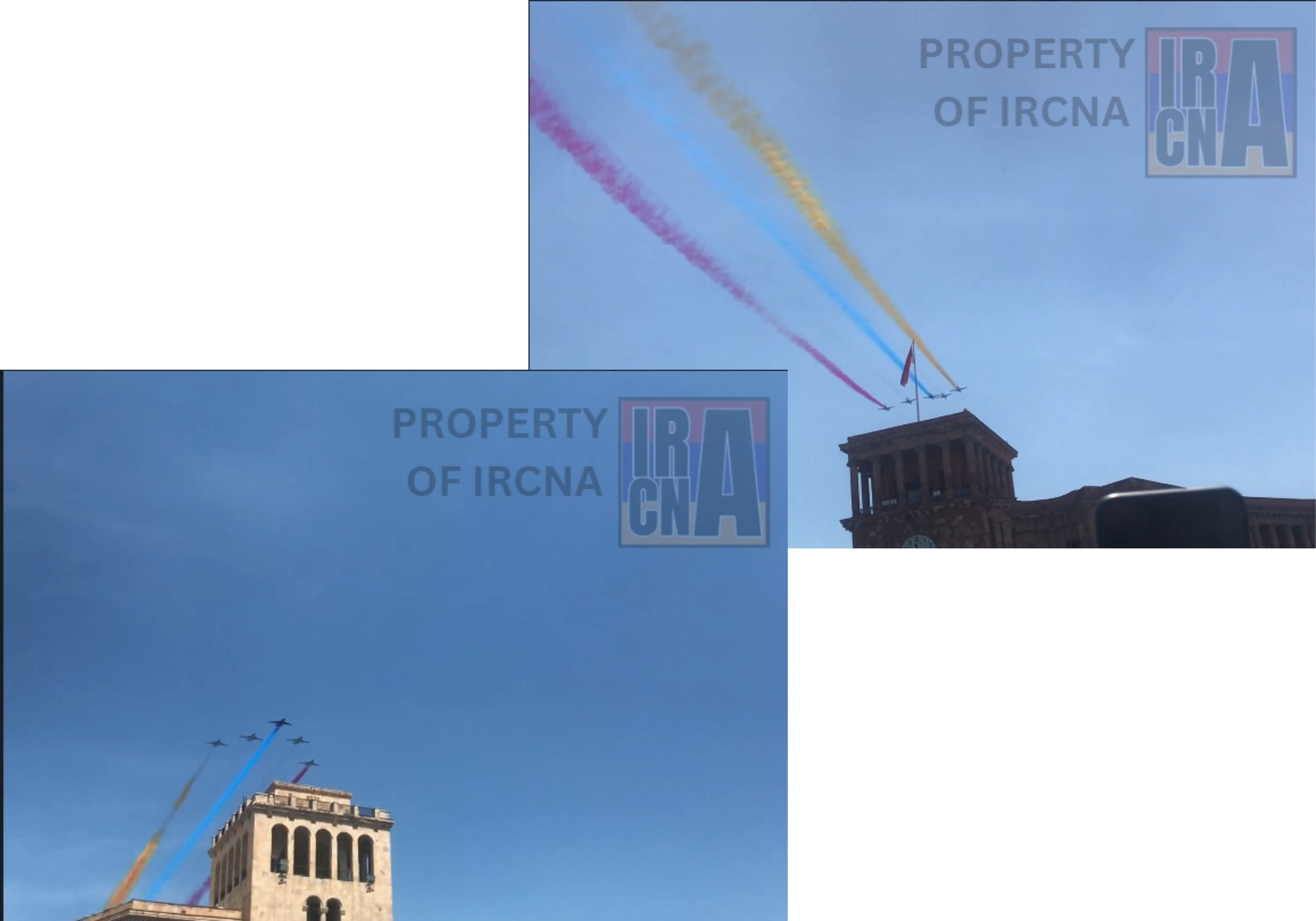
Under an uncharacteristically sharp spring sun, the dense pink tuff architecture of Yerevan’s Republic Square reverberated on Thursday, May 28, 2026, with a sound the capital had not hosted in over ten years: the mechanical roar of heavy armored columns and low-flying tactical fighter jets.
The occasion was Republic Day, marking the 108th anniversary of the founding of the First Republic of Armenia in 1918. Yet the atmosphere across the capital was stripped of traditional historical nostalgia. For the ruling administration, the event was explicitly designed as a massive, public accountability report—a visual demonstration of the rapid, sweeping structural overhaul and international procurement diversification undertaken by the Ministry of Defense since the structural crisis of 2022.
For the thousands of citizens packed tightly behind security barriers along the adjacent state avenues, however, the display was a deeply polarizing lightning rod. The sight of sophisticated, newly acquired foreign weaponry rolling past the National Gallery served as a stark reminder of the nation’s changing alliances, even as it amplified a profound, ongoing societal grief regarding sovereign losses, displaced populations, and the fate of unresolved political prisoners. What unfolded was an intense national identity crisis compressed into a two-hour state ceremony.
Part I: The Structural Anatomy of the Celebration
The ceremony was structured around an intentional transition from medieval defensive symbolism to a highly technical, forward-looking showcase of modern defense diversification.
1. Opening Protocol and Historical Relics
The parade commenced precisely at 10:00 AM local time with the formal assembly of the guard. The State Flag of the Republic of Armenia and the official Combat Banner of the Armed Forces were escorted to the center of the square by the Special Honor Guard Battalion.
In a deliberate effort to anchor the modern military within historic statehood, the standard-bearers brought out the Holy Cross of King Ashot II the Iron (*Ashot Yerkat*). This medieval relic, historically carried into battles by the Bagratid military as a symbol of unyielding sovereign defense, served as the ideological bridge connecting ancient Armenian survival to the contemporary state.
2. The Prime Minister’s Ideological Decree
Following the inspection of the troops by the Minister of Defense, Prime Minister Nikol Pashinyan delivered a keynote address from the central podium. Rather than offering a standard celebratory speech, Pashinyan directly addressed the sweeping changes implemented across the military branches, introducing the public to an altered institutional framework:
“Today we present to you the new army of the Republic of Armenia — with new weapons, new uniforms, and a new ideology.”
Pashinyan explicitly detailed the legal and geopolitical boundaries of this updated military doctrine, seeking to reassure both domestic observers and international actors that the armed forces had been restructured exclusively for defensive deterrence within established borderlines:
“The core of that ideology is the following: the army’s only mission is to defend the internationally recognized sovereign territory of the Republic of Armenia. Our army must not be used outside Armenia’s internationally recognized territory, except for peacekeeping missions carried out on the basis of international treaties.”
The administration framed the entire demonstration within what it called a “completely new historical context,” referencing the ongoing efforts to establish a durable peace in the region after nearly 35 years of active confrontation. Pashinyan defended the necessity of the high-profile parade by asserting that a highly capable, localized defensive military is the ultimate prerequisite for maintaining that peace, stating that “a country without a defensive and strong army may become tempting for attack.”
Part II: The Technical Overview of the New Arsenal
The hardware procession that followed the address served as physical confirmation of Armenia’s decoupling from its historical, singular reliance on Russian defense networks. The mechanized columns prominently featured equipment manufactured across seven distinct nations, emphasizing rapid technological adaptation.
| Reconnaissance & EW | Tactical Mechanized | Heavy Artillery |
| Marakhugh Jamming Systems | French Bastion APCs | Indian Pinaka MBRL |
| Wolf 4-Legged UGVs | Domestic Mortars | French CAESAR Howitzer |
| CH-4B “Agegh” UAVs | Tor-M2KM / Kornet-M | Short-Range “Karitch” |
1. Ground Infantry and Advanced Uniform Reforms
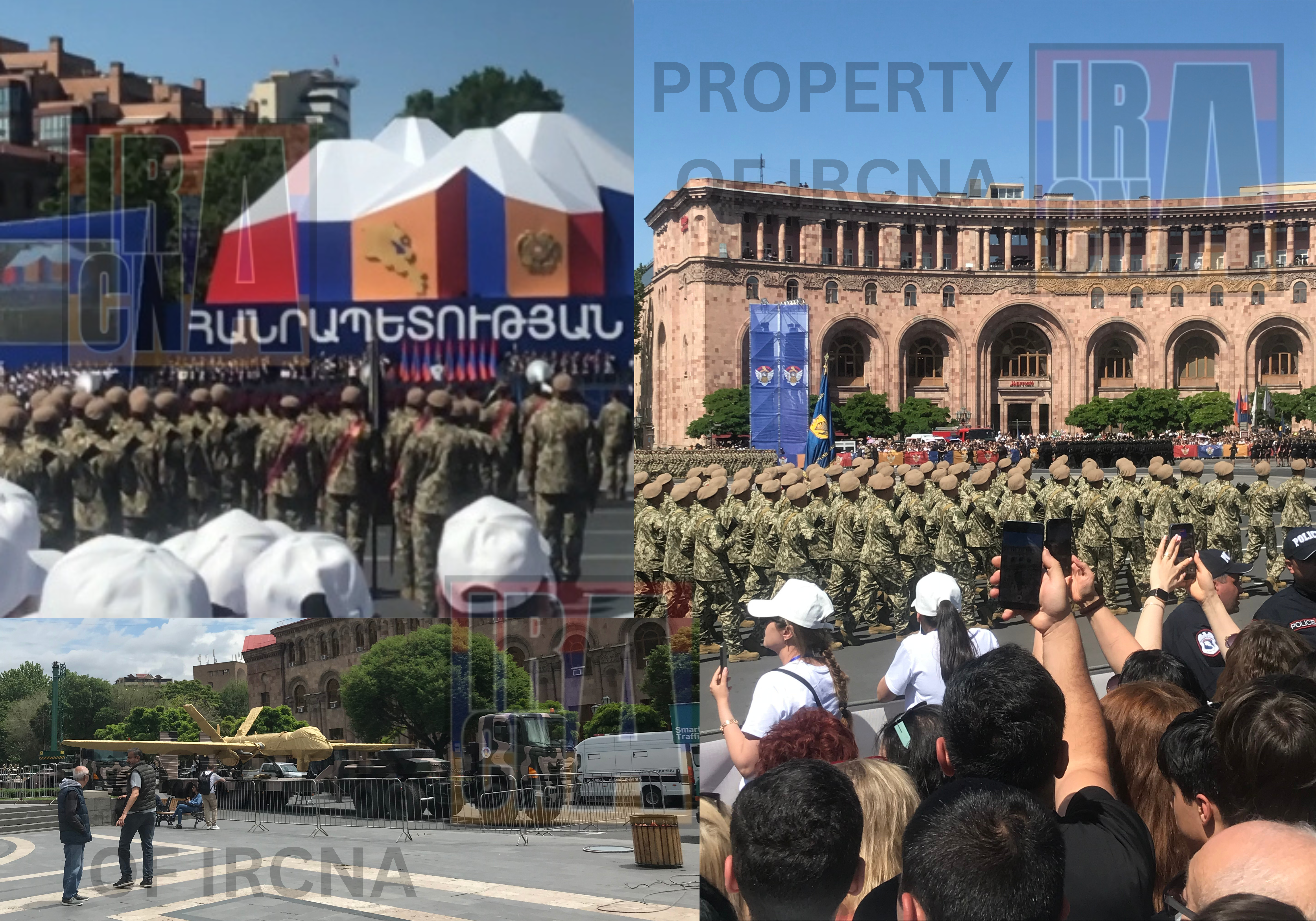
The initial marching blocks consisted of cadets from the Vazgen Sargsyan Military Academy and the Armenak Khanperants Military Aviation Institute, followed by active-duty infantry, border guards, and specialized peacekeeping divisions. Observers immediately noted that the troops were outfitted in entirely redesigned combat gear, replacing older tactical load-bearing equipment with modular, high-protection ballistic vests and uniform patterns optimized for regional topographies.
2. Electronic Warfare and Autonomous Systems
Signaling a major shift toward digital battlefield management, the mechanized section was initiated by electronic warfare units under the command of Colonel Gevorg Ghambaryan. The procession showcased the deployment of the indigenous **“Marakhugh”** (Fog) aerial suppressor system, designed to disrupt low-altitude drone telemetry and manipulate satellite navigation signals.
Immediately following were the **“Wolf”** tactical reconnaissance-strike systems—indigenously manufactured four-legged unmanned ground vehicles (UGVs). These robotic units walked through the square to demonstrate their ability to cross jagged mountainous terrains to deliver supply payloads and execute target acquisition without risking infantry life.
3. Tactical Armor and Global Procurement
The heavy vehicular column, commanded by Special Forces Colonel Poghos Petrosyan, brought out the core components of Armenia’s new procurement strategy. The armor procession included:
- **French Bastion Armored Personnel Carriers:** Heavily armored tactical transport vehicles fitted with custom 12.7 mm ballistic stations.
- **Indian Pinaka Multi-Barrel Rocket Launchers (MBRL):** Highly agile, rapid-fire saturation artillery platforms capable of launching devastating precision salvos over long distances.
- **The CAESAR Self-Propelled Howitzer System:** Sourced from France and integrated under the local deployment name *Aramazd*, showcasing rapid “shoot-and-scoot” operational mobility.
- **Integrated Aerial Defense Assets:** The rollout included Chinese-made CH-4B reconnaissance-strike drones (locally labeled *Agegh*), Iranian Majid short-range missile interceptors (designated *Karitch*), alongside existing systems like the Tor-M2KM, Kornet-M, and domestic *Kaytsak* and *Dev-11* loitering munitions.
4. Air Formations
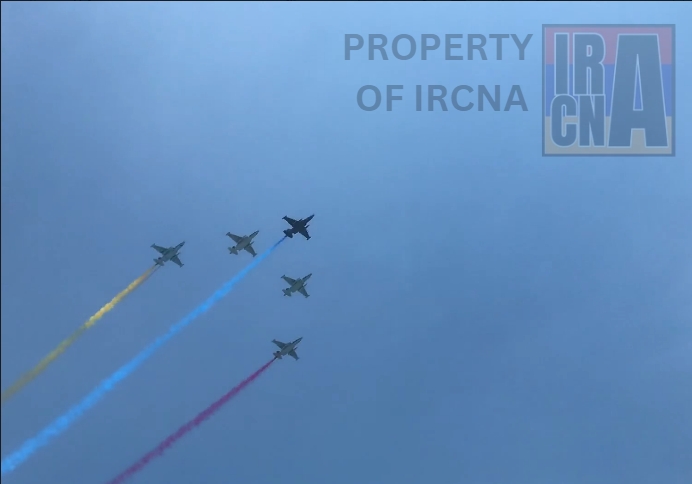
The event concluded with a coordinated flyover by the air force. Tactical Mi-17 transport and support helicopters led the aerial columns, followed closely by a synchronized wedge of Su-25 close-air-support jets and advanced Su-30SM multirole fighters tracing wide arcs over Republic Square, leaving streams of smoke against the sky.
Part III: The Rebranding of the Military Identity
Beyond the hardware, the most scrutinized element of the day was the comprehensive visual debut of the newly redesigned official emblem of the Armenian Armed Forces. Dropping the old layout on banners and uniforms across Yerevan, the Ministry of Defense launched an institutional campaign to correct what it termed serious structural mistakes in the nation’s military heraldry.
The Rejection of the 2001 Insignia
In an exhaustive, formal explanatory breakdown broadcast by state media channels on the eve of the parade, the Ministry of Defense detailed the specific reasons why the 2001 insignia—approved during the administration of former President Robert Kocharyan—was officially decommissioned: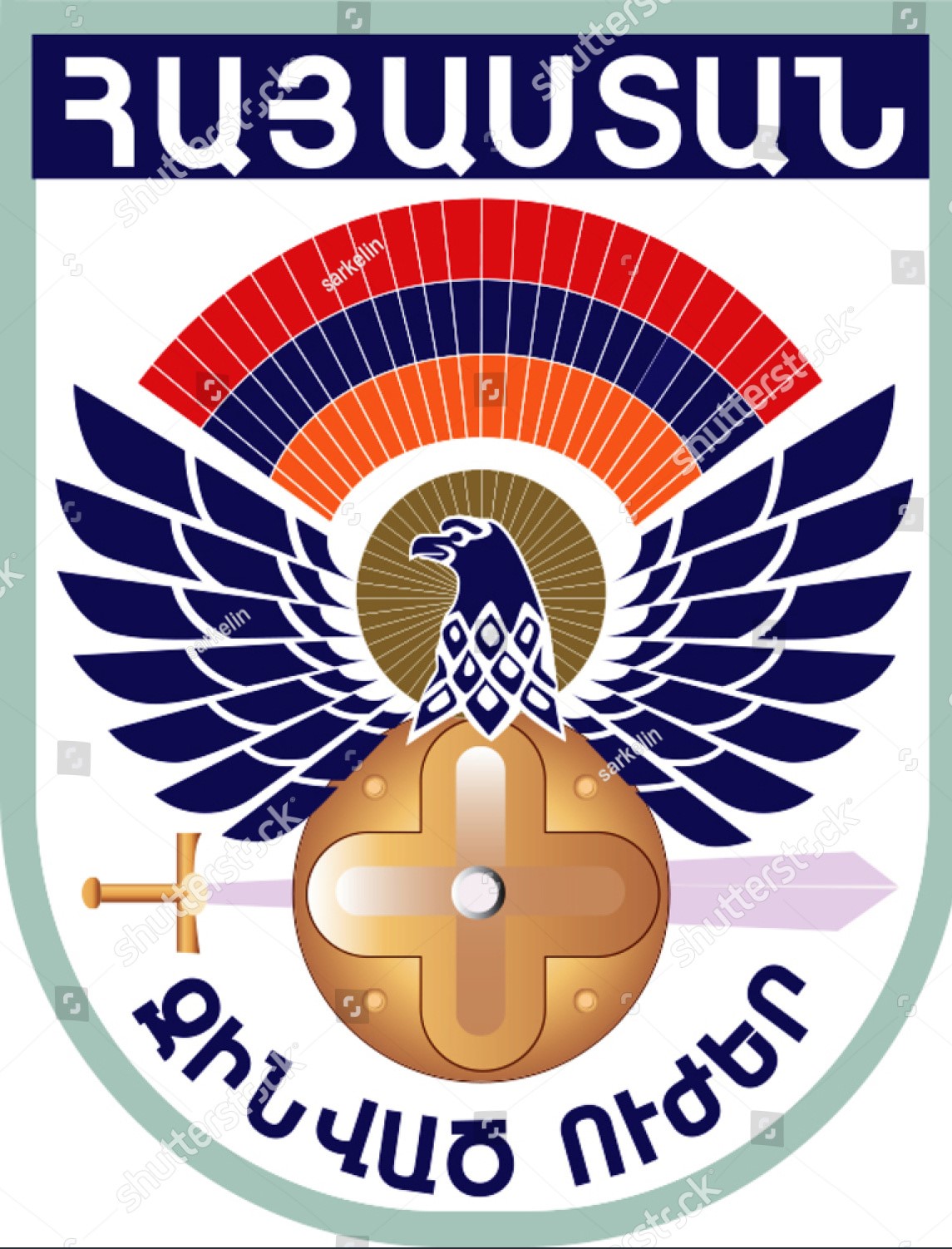
- **The Closed Beak of Passivity:** The eagle in the 2001 coat of arms was illustrated with a tightly closed beak. In classical global heraldic law, a closed beak symbolizes a non-combatant, passive, or “lifeless” posture. The ministry emphasized that this imagery was completely unaligned with the vital energy, voice, and defensive spirit required of an active sovereign army.
- **The Fused, Limb-less Anatomy:** The old eagle lacked a distinct torso, thighs, and defined muscular structure. Its head and wings were fused directly into a flat, indistinct cluster of feathers without visible talons, creating what the ministry openly described as “the visual impression of a dismembered, powerless, and vulnerable creature.”
- **The Concealed Sword:** The tactical sword in the 2001 design was placed directly *behind* the defensive shield. In international military iconography, hiding a weapon behind a shield implies unreadiness, passivity, or a lack of immediate operational capability.
- **The Fragmented Tricolor:** The national flag was represented as broken ribbons wrapped around a central emblem rather than a solid, flowing standard. The defense review warned that this could be symbolically misinterpreted as representing a “fragmented, divided, or incomplete statehood.”
The Symbolic Architecture of the 2026 Emblem
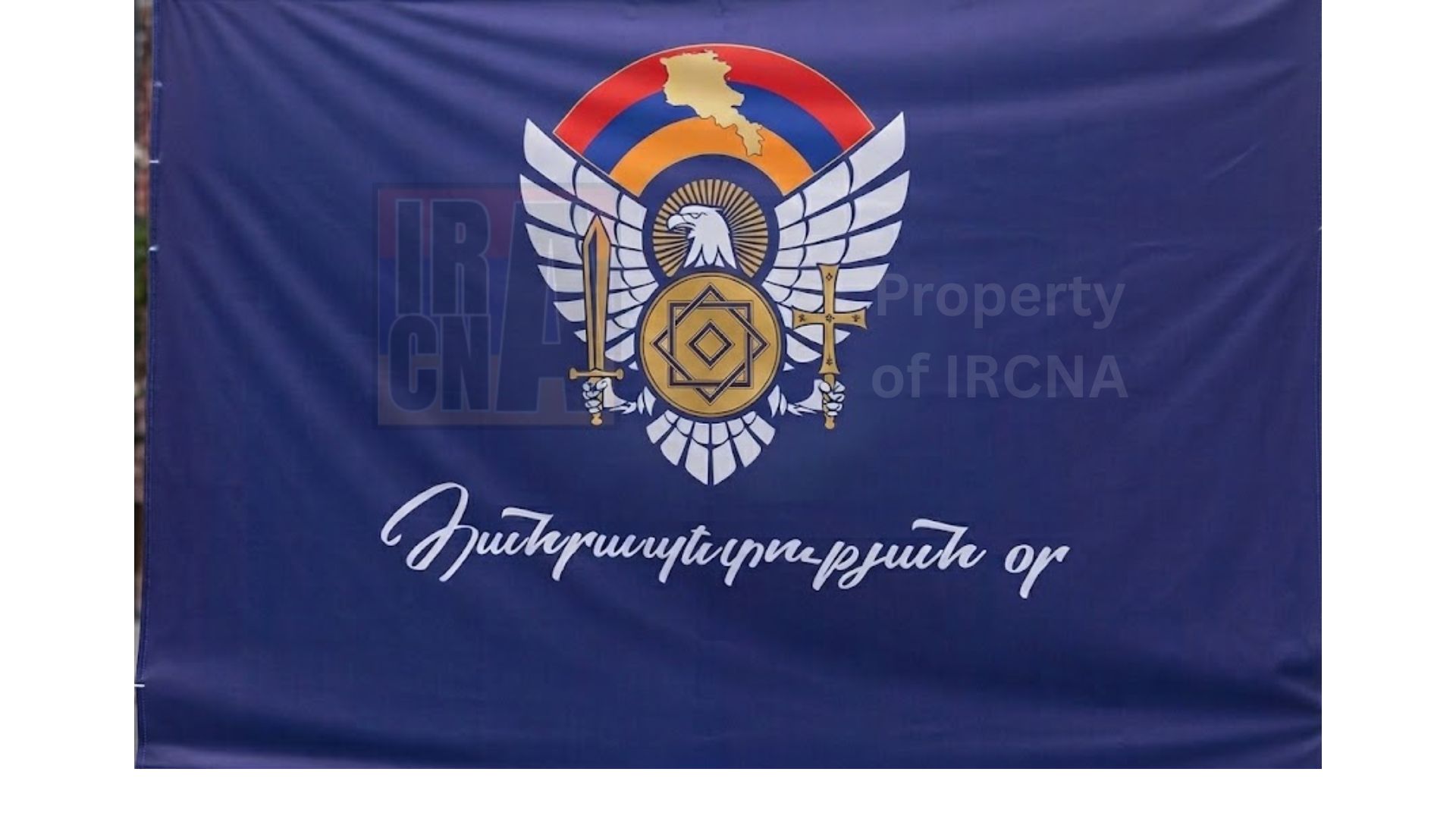
The updated design completely overhauls these elements, moving the eagle into an assertive posture of total vigilance. The eagle’s beak is now wide open, which the heraldic brief notes “symbolizes vitality, readiness, vigilance, and the fundamental right of speech and power.”
| New Emblem Component | Specific Heraldic & Operational Symbolism |
| **Fully Realized Torso & Open Beak** | Replaces past passivity with a clear declaration of life, alert readiness, and sovereign voice. |
| **The Chest Shield & Inner Seed** | Features an eight-pointed Armenian sun cross over a golden shield. At its center rests a **living seed**, symbolizing the future generations of soldiers who enter service, grow through duty, and ensure the eternal continuity of the state. |
| **Forward-Placed Golden Sword** | Positioned actively in front of the body in the eagle’s left talon, signifying absolute, immediate readiness to protect sovereign borders. |
| **The Cross of Ashot II the Iron** | Grasped firmly in the right talon, embedding the historical defensive continuity of the nation directly into modern operations. |
| **Radiant Sun Backdrop** | Placed behind the eagle to indicate that the core, sacred values of the Armenian populace are held under the active protection of the military. |
| **The Unified Flag & Border Map** | The top crown features a single, flowing, unfragmented tricolor holding an exact geographic **map of the Republic of Armenia**, legally binding the military’s mission exclusively to the country’s recognized borders. |
Part IV: The Local Pulse on the Streets of Yerevan
While the state successfully executed its highly coordinated display of defensive strength, an on-the-ground survey conducted by IRCNA across Republic Square and adjacent streets revealed a deeply complicated, highly nuanced public response. The sight of rolling heavy artillery could not be isolated from the intense personal trauma and political anxieties gripping the local populace.
Of the 62 attendees who participated in the survey, a clear majority of 48 voiced distinct support for the parade. For these individuals, the presence of sophisticated French and Indian weapon systems was welcomed as a necessary, long-overdue proof of deterrence and true national sovereignty.
“I believe this event is great for our future as an independent country,” said Karen Gharibian, 31, who stood near the edge of the square. “We are arming ourselves to not only protect us, but also to show the world we do not have to rely on anyone for our own protection. Soon I believe we will be able to free the Armenian hostages from Azerbaijan.”
Conversely, 14 of the surveyed individuals expressed clear opposition to the state-sponsored spectacle. For this segment of the crowd, the celebration felt deeply disconnected from lingering humanitarian wounds, most notably the unresolved welfare of over a hundred thousand displaced families from Artsakh (Nagorno-Karabakh) and the continuing detention of Armenian prisoners of war in Baku.
“This parade is nothing but a huge spectacle,” countered Davit Pogosyan, 47, who watched the procession with his arms crossed. “It is disguised as being for the people, for our country, but it is politically tainted and subtly used to increase his votes.”
For many, the military columns brought up raw family emotions that overrode state messaging. Onlookers frequently stood quietly against the security barriers, not waving flags, but searching intently for the familiar face of a relative marching in the active infantry rows.
“I love the representation of our troops, but I think we should not forget about those we lost also,” explained Mariam Hovhannisyan, 29, who attended in support of her brother in active service. “We still have many displaced brothers and sisters from Artsakh. We have prisoners in Azerbaijan. I don’t think we can truly be independent if we’re not reunited.”
Her friend, Lilit Gasparyan, 29, offered an even sharper critique of the government’s priorities:
“I don’t think this parade should have happened. There is no point in all this if the government won’t work to free the Armenian hostages in Azerbaijan. They continue to give our beautiful Armenia away and do very little in helping those displaced. We only came here to show support for her brother, who is a soldier.”
Adding to this complex public dynamic was a palpable hesitation among dozens of other bystanders to engage with the media at all. Multiple individuals who declined to give statements cited an intense fear of having their personal words distorted or their names publicly attached to sensitive political opinions within a highly polarized local information environment. To accommodate this, IRCNA engaged each participant off-the-record first to build a safe space before documenting any statements for publication.
Conclusion: A Nation Navigating Its Path
Ultimately, the 2026 Republic Day parade achieved its institutional goals: it delivered a powerful visual manifestation of a modernized defense doctrine and an entirely overhauled heraldic identity designed for independent sovereignty.
Yet, the raw data and voices gathered on the streets of Yerevan demonstrate that the state’s message cannot simply be absorbed as a binary of absolute approval or rejection. Even among the parade’s most ardent supporters, deep concerns regarding unresolved hostages and displaced compatriots remain an open wound.
As Armenia enters this new era of defense diversification and redefined symbolism, its people present a deeply reflective, complex portrait: a society fiercely proud of its frontline defenders, intensely anxious about its regional stability, and entirely far from monolithic.
Sources
- **IRCNA On-the-Ground Dataset:** Firsthand field documentation, qualitative interviews, and notes compiled by independent journalist Mikael Yamiosei on May 28, 2026, on Republic Square and adjacent avenues. This includes verification metrics from 62 interviewees and verbatim quotes from Davit Pogosyan, Karen Gharibian, Mariam Hovhannisyan, and Lilit Gasparyan.
- **Armenpress National News Agency:**
- Official verbatim transcriptions of Prime Minister Nikol Pashinyan’s public keynote address (“Pashinyan highlights defense overhaul, new doctrine at Republic Day parade,” published May 28, 2026).
- Official heraldic analytical brief released by the state apparatus (“Armenia explains redesign of army emblem,” published May 27, 2026).
- **Ministry of Defense of the Republic of Armenia (MoD):** Official multimedia publication and symbolic guidelines outlining the heraldic flaws of the 2001 insignia (the closed beak, hidden sword, and broken flag fragments) and the structural parameters of the 2026 emblem (the central seed of sovereign continuity and the integrated border map).
- **EVN Report Tactical Inventory:** Technical reference mapping of the localized defense procurement assets displayed (“May 28 Parade: What’s New in Armenia’s Arsenal,” published May 28, 2026), confirming the physical public deployment of French CAESAR (*Aramazd*) artillery, Indian Pinaka rocket platforms, Chinese CH-4B (*Agegh*) strike drones, and Iranian Majid (*Karitch*) defense systems.
- **Public Radio of Armenia / CivilNet Defense Desk:** Comparative analyses tracking the historical absence of large-scale military parades in Yerevan since the early 2010s and tracking the implementation of the post-2022 defense diversification policies (“Armenia showcases military equipment during Republic Day parade,” published May 28, 2026).

Comments