Full Article: The Marriage between Wine and Gastronomy | La Hoja de la Parra – Olé Yerevan</summary>
The Marriage between Wine and Gastronomy | La Hoja de la Parra
How a Spanish Chef in Yerevan Paired Wine, Corrected Sangria Myths, and Found Armenia's Secret Weapon: The Grape Leaf
By Mikael Yamiosei | IRCNA
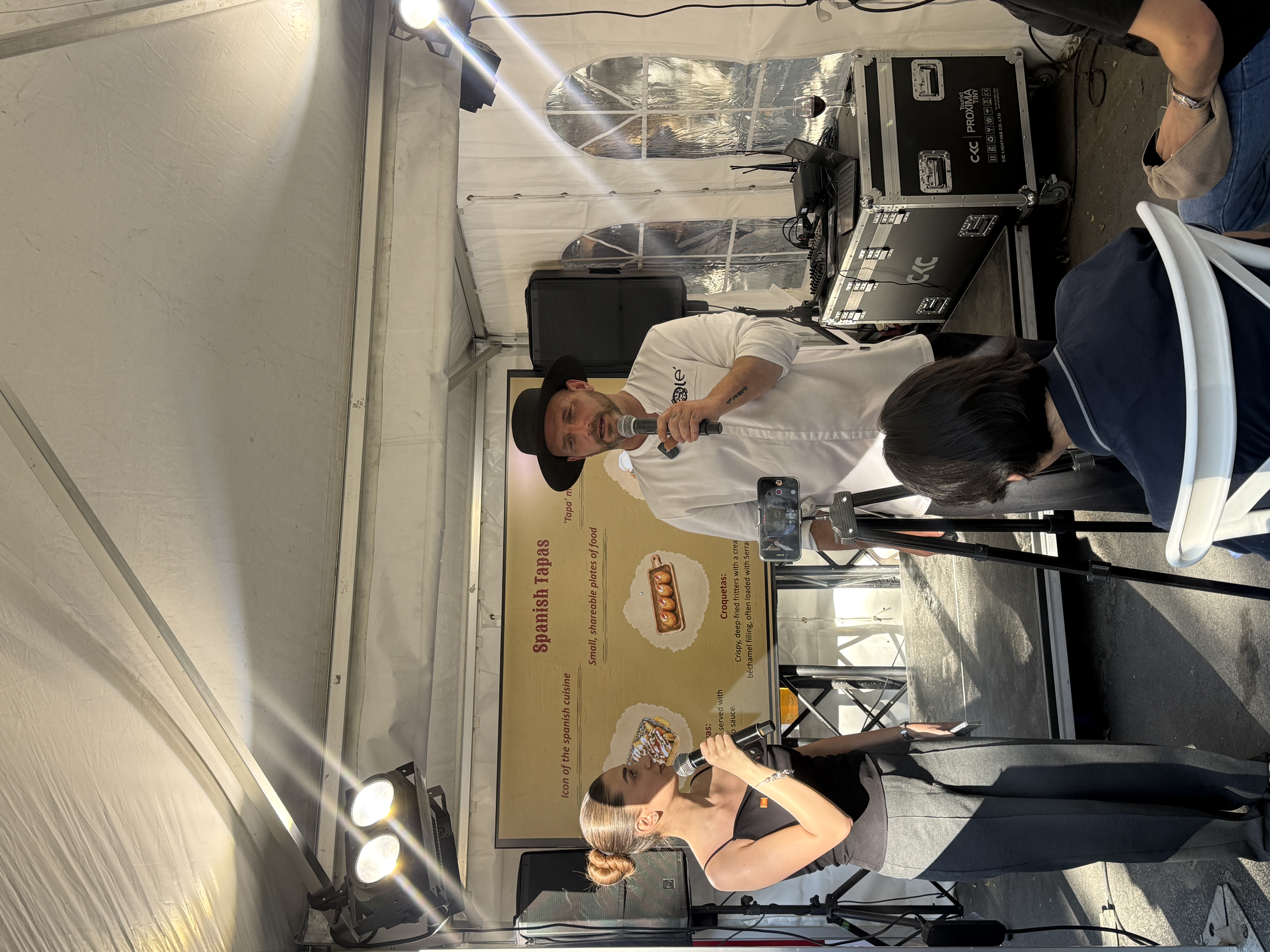
YEREVAN — The voice was Spanish. The translator, Elizabeth B., stood immediately to his right, converting his words into English in real time. The audience sat on folding chairs on Saryan Street, part of the Wine and Gastronomic Business Talks at the 10th anniversary of Yerevan Wine Days.
Chef Antonio, head chef of Olé Yerevan, had been cooking since he was twelve years old. He was now forty‑three. He had worked across Europe representing Spanish cuisine. And on the afternoon of June 7, 2026, he spent about half an hour explaining to an Armenian audience how to pair wine with jamón ibérico, why paella is never dinner, and which Spanish wine cocktail is actually a tourist trap.
But the moment that changed the tenor of the talk came when I asked him, in Spanish, about fusion. His answer was not about blending traditions into a muddy middle. It was about a single ingredient: la hoja de la parra — the grape leaf. He saw in Armenia's high‑acid grape leaves a structural solution to the richness of Iberian pork and the oiliness of Galician seafood.
What followed was not a recipe. It was a philosophy of culinary translation — and a rare public window into how an international chef thinks about adapting to a new food culture without betraying his own.
The Chef and His Restaurant
Antonio did not plan to come to Armenia. "Me ha tocado venir aquí," he said — it fell to me. But once here, he built Olé Yerevan at 52/2 Mashtots Avenue with a clear goal: transport guests to Spain. "Cuando llegas al restaurante, todo el mundo que ha estado en España va a sentir la misma sensación — la comida, el sabor, el diseño, la música." (Translation: "When you arrive, everyone who has been to Spain feels the same sensation — the food, the flavor, the design, the music.") His staff, he said, have absorbed that spirit. "Se sienten un poco como españoles – son muy alegres, muy felices." ("They feel a little like Spaniards — very joyful, very happy.")
He runs the place under serious logistical constraints: landlocked Armenia is not the natural home for Galician octopus or acorn‑fed Iberian ham. Yet he maintains direct sourcing for 50% Iberico Cebo de Campo and European seafood programs. He also spoke with genuine admiration for local Armenian produce — fresh vegetables and fruits that, to him, feel Mediterranean.
The Architecture of Wine and Food
Antonio's wine‑pairing framework was classical, crisp, and entirely portable to an Armenian table.
- White wine – pescado, marisco, fruta (fish, seafood, fruit‑forward dishes).
- Red wine – carne guisada, jamón ibérico (stewed meat, Iberian ham).
- Rosé wine – gazpacho, salmorejo, bebidas refrescantes, también mariscos (gazpacho, salmorejo, refreshing drinks, and also seafood).
- Sweet wine – postres y quesos (desserts and cheeses). He noted that sweet wine exists in both Andalucía and Armenia — a small bridge between the two cultures.
He did not linger on technicalities. The framework was offered as a working tool, not a dogma. But its clarity was useful: a white for light proteins, a red for heavy meats, a rosé for summer soups and seafood, and a sweet for the final course.
Then came the cocktail list. When an audience member asked what Spaniards drink with wine as a base, Antonio ran through the standards:
- Tinto de verano – red wine with lemon soda.
- Calimocho – red wine with Coca‑Cola.
- Rebujito – white wine with Sprite or lemon soda (the drink of Seville's April fair).
- Clara – beer with lemon soda, for midday.
And then he delivered a necessary correction. "Se nota que los españoles no toman sangría para turistas." ("You can tell that Spaniards do not drink sangria — it's for tourists.") He softened it slightly: they do drink it occasionally in summer. But the association with tourism is accurate. For anyone who has ordered sangria in Madrid and received a knowing smile, this was vindication.
The Cultural Corrections: Paella and Timing
Antonio also corrected a misconception that has taken root in Armenia: paella as a dinner dish.
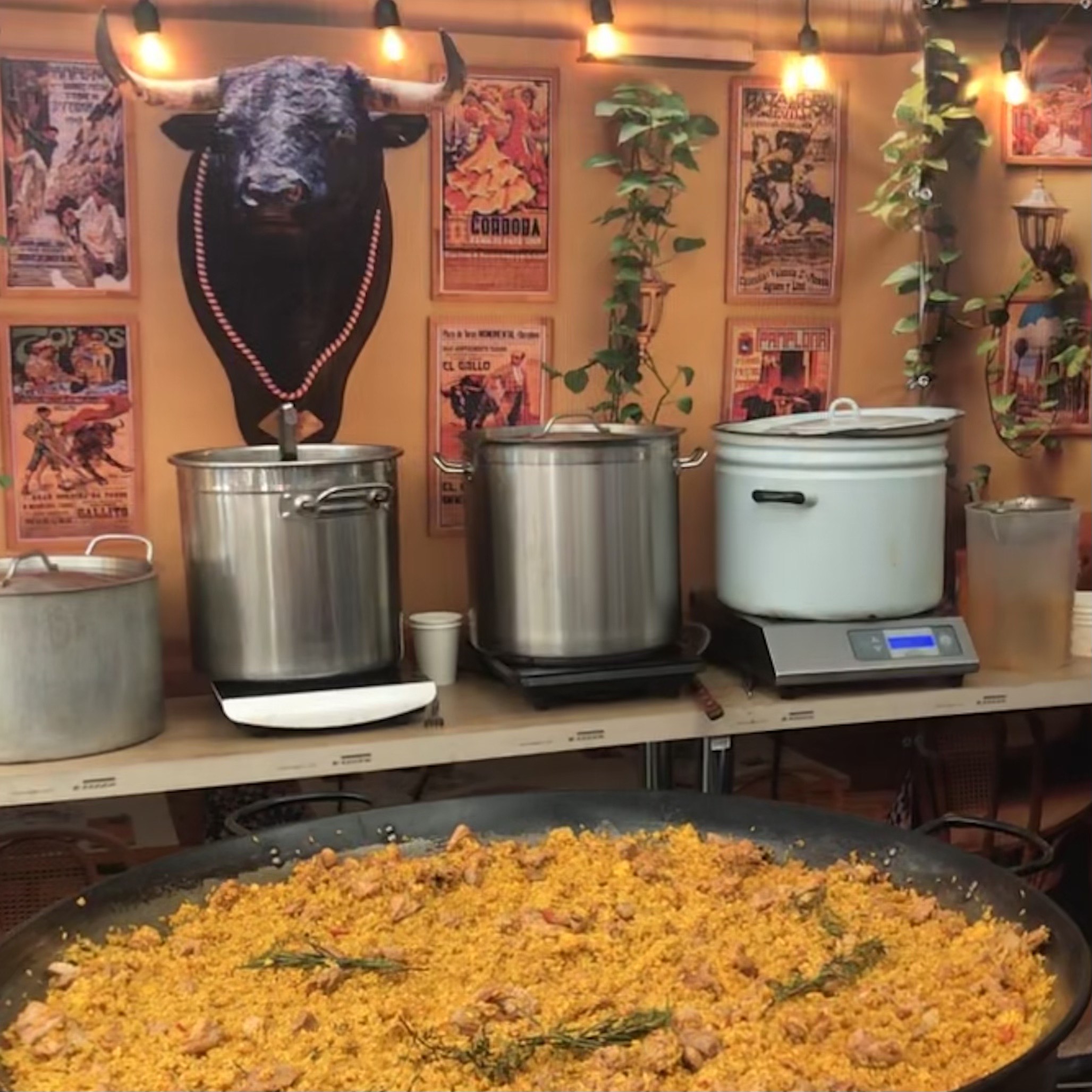
"El arroz no lo comiendo por la noche," he said flatly. ("Rice is not eaten at night.") In Spain, paella is a Sunday family lunch, prepared outdoors, watched as it cooks, accompanied by tapas along the way. "Una reunión familiar, conectar todos juntos, ver cómo se prepara, comerse una tapa mientras que estamos preparando." ("A family reunion, connecting everyone together, watching how it is prepared, eating a tapa while we prepare.")
The Armenian habit of serving paella in the evening, he implied, is a local adaptation — not a crime, but not tradition either.
Tapas themselves follow a strict clock: from 12:00 to 4:00 PM, and again from 8:00 PM to midnight. This was offered in response to an Argentinian audience member who noted that her country eats much later. Antonio did not budge.
The Fusion Question
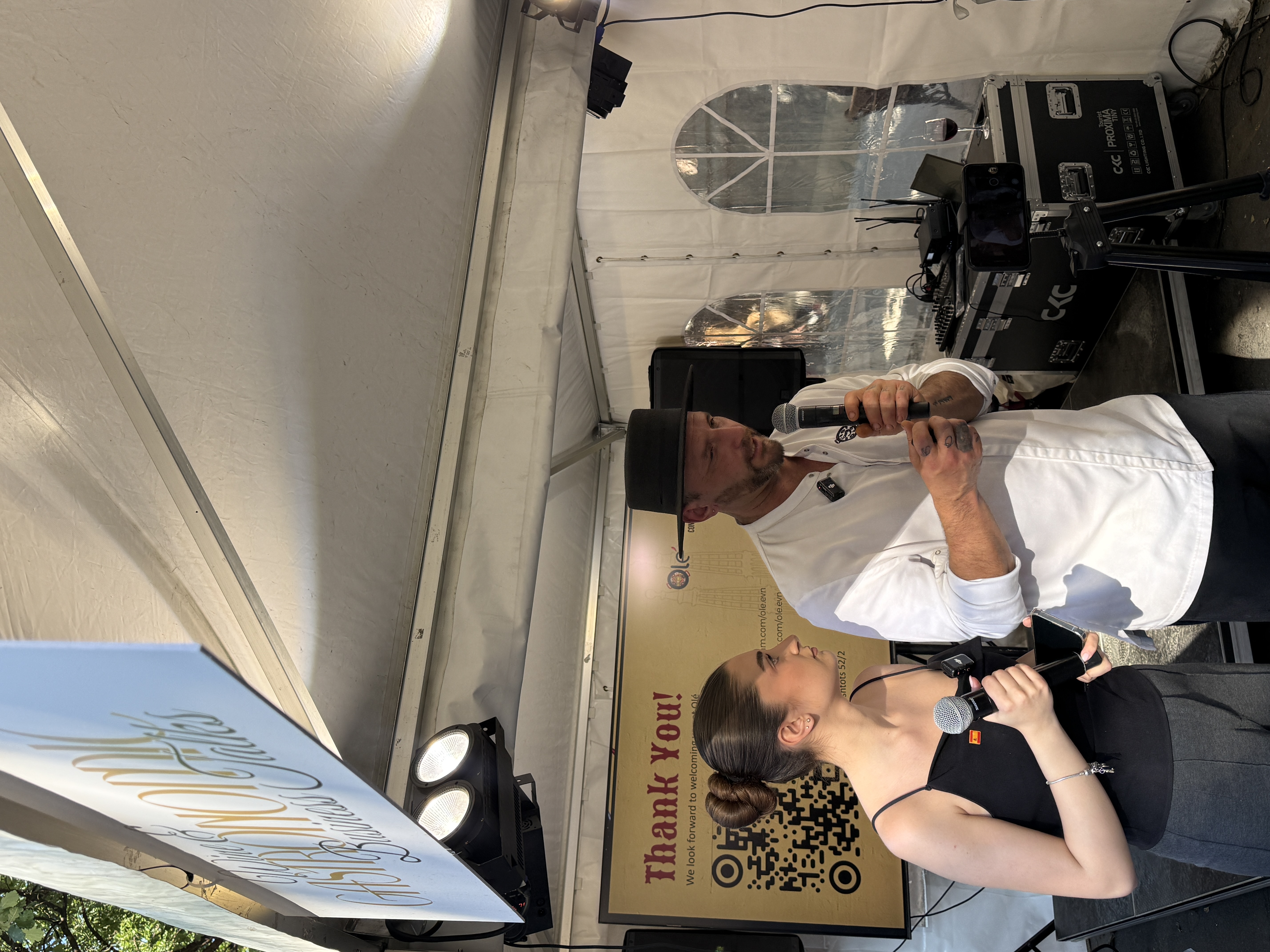
Midway through, I asked him in Spanish: if you could fuse something from Armenian cuisine with Spanish tradition, what would it be?
His answer was immediate and specific.
"La hoja de la parra." The grape leaf.
In southern Spain, he explained, grape leaves are used to wrap slow‑cooked meats, fish, or rice mixtures. The leaf adds a subtle vegetal note and acts as a natural vessel. But Armenian grape leaves, he had discovered, are different: they are fresher and significantly higher in acid than their Spanish counterparts.
That acidity, he argued, is not a problem — it is a solution. It can cut through the rich, heavy fats of Iberian pork (jamón ibérico, chorizo) and balance the oiliness of seafood like Galician octopus or boquerones. His proposal: wrap slow‑cooked Iberian meat or fresh white fish in fresh Armenian grape leaves, then grill or steam, and serve as a tapa.
"Yo siempre tiro por mi zona. Mi zona es del sur," he said. ("I always lean toward my zone. My zone is the south.") But he saw no contradiction. The Armenian leaf, in his view, is an improvement on the ingredient he grew up with.
This was not fusion as novelty. It was fusion as engineering — using a local ingredient to solve a structural problem.
The Sobremesa and the Chef's Philosophy
Asked whether he preferred the main dish or the after‑meal lingering (sobremesa), Antonio chose the latter without hesitation.
"A mí me gusta más la sobremesa... es como picar un poco. Al final la sobremesa es tapear, comer pequeñas porciones de comida. Al final a mí un plato grande no me gusta, me gusta el producto." ("I prefer the after‑meal lingering... it's like snacking a little. In the end, the after‑meal is about tapas, eating small portions of food. In the end, I don't like a large plate — I like the product itself.")
This is the core of his cooking: the tapa is not a menu category but a way of eating — small, focused, ingredient‑driven. It is the opposite of the oversized, sauce‑heavy plate. And it is why his wine pairings are simple: let the product speak, let the wine support, let the conversation continue.
He also gave a short masterclass on jamón ibérico: look at the fat and the condition of the ham. Learn the label colors — black, green, white — which indicate purebred versus crossbreed. "Extremadura y Huelva es donde se crían," he said. ("Extremadura and Huelva are where they are raised.") Olé serves 50% Iberico Cebo de Campo — a solid, honest grade.
The Silence of the Rest
Before, during, and after Yerevan Wine Days, I contacted eight restaurants and gastronomic businesses for interviews or comments. As of June 13, 2026, none responded. Olé Yerevan's presentation was the only restaurant‑sector contribution to the Wine and Gastronomic Business Talks that yielded original, on‑the‑record material.
That silence is worth noting. It does not indicate failure or unwillingness — only that the full story of Yerevan's restaurant scene at the festival remains, for now, partial.
Conclusion: The Leaf as Bridge
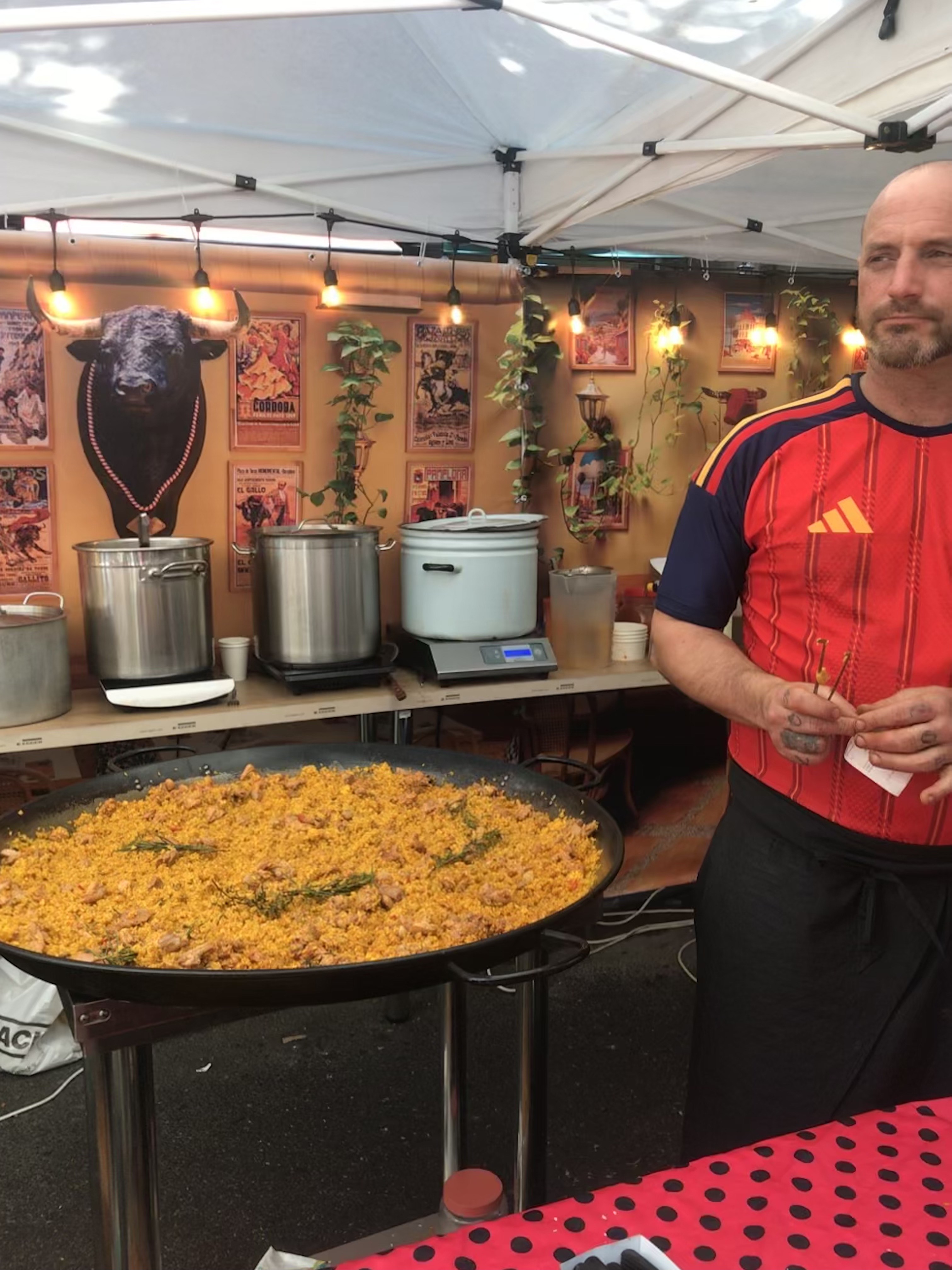
Antonio will be a chef until the end, he said. "Voy a más la cocina." ("I am going further in cooking.") That drive is visible in his willingness to adapt — not by abandoning Spanish tradition, but by finding an Armenian ingredient that makes that tradition better.
The grape leaf is small, green, and abundant. It has wrapped dolma in Armenian kitchens for centuries. Antonio looked at it and saw something else: a high‑acid counterweight to the fatty richness of his homeland. That act of seeing — of translating between cuisines without erasing either — is the quiet work of hospitality at its best.
On Saryan Street, on a warm June afternoon, a Spanish chef stood with a translator at his right and told us how to pair wine, when to eat paella, and why sangria is for tourists. Then he told us about a leaf. That leaf is now, for me, the image of this year's Wine and Gastronomic Business Talks: a small bridge between two coasts of the same sea.
Sources
- Live presentation by Chef Antonio (Olé Yerevan), with live English translation by Elizabeth B. (standing immediately to his right), Wine and Gastronomic Business Talks, Saryan Street, Yerevan Wine Days 2026 (June 7). Transcript provided by IRCNA.
- Restaurant address: 52/2 Mashtots Avenue, Yerevan.
- Brief stall visit (June 7) – by mutual agreement, the presentation serves as the informal interview; no follow-up needed.
Eight additional restaurants were contacted before, during, and after the festival. None responded as of June 13, 2026.
Comments